Systemic treatment of sarcoma: not one regimen for every subtype
Liposarcoma, leiomyosarcoma, synovial sarcoma and epithelioid sarcoma can require very different systemic strategies. Histological subtype, disease extent, prior therapy and molecular markers matter.
Localized disease: why chemotherapy is selective
For resectable STS, good local treatment remains the foundation. Neoadjuvant or adjuvant chemotherapy may be discussed in selected high-risk patients and in more chemosensitive subtypes, but modern international guidance does not support “chemotherapy for everyone after surgery”.
Advanced or metastatic STS: practical anchors
Doxorubicin
A first-line backbone for many adult soft-tissue sarcomas.
Doxorubicin + ifosfamide is considered when greater tumour shrinkage is especially important.Doxorubicin + trabectedin
LMS04 changed current first-line discussion.
Maintenance trabectedin follows the induction combination.Trabectedin / eribulin
These drugs have important histology-specific roles after prior treatment.
Tecelra
TCR-T therapy for a biomarker-selected HLA-A*02-compatible, MAGE-A4-positive population.
Atezolizumab
A dedicated evidence-based option in unresectable or metastatic alveolar soft-part sarcoma.
TRK inhibitors
For rare fusion-driven tumours, molecular testing can directly alter treatment.
Doxorubicin remains a standard first-line option. Doxorubicin + ifosfamide is usually reserved for situations where greater tumour shrinkage is particularly important and higher toxicity is acceptable.
In LMS04, doxorubicin + trabectedin followed by maintenance trabectedin improved median OS to 33 months versus 24 months with doxorubicin, and PFS to 12 versus 6 months.
Trabectedin and eribulin have subtype-specific roles after prior treatment. Eribulin demonstrated an overall-survival benefit in previously treated liposarcoma versus dacarbazine.
Pazopanib is one option in previously treated non-adipocytic STS when appropriate for the histology and clinical setting.
In the US, afamitresgene autoleucel (Tecelra) is the first approved TCR-T therapy for unresectable/metastatic synovial sarcoma after prior chemotherapy in patients with specified HLA-A*02 alleles and MAGE-A4-positive tumours. In June 2026 the US indication was expanded to patients aged 12 years and older.
Atezolizumab has a dedicated FDA indication for unresectable or metastatic ASPS. In the 2026 long-term update, ORR was 35.8%, median PFS 20.8 months and median duration of response 37 months - an important histology-specific exception to the generally limited role of checkpoint immunotherapy across unselected STS.
Rare NTRK-fusion tumours can respond to TRK inhibitors. This is a clear example of molecular testing directly changing therapy.
Immunotherapy: why the melanoma model does not simply transfer
Checkpoint inhibitors are not a universal standard for all STS. Activity varies greatly by subtype and is low in many sarcomas. Recent progress has often come from subtype-specific agents, molecular targets and engineered cell therapies rather than from one immunotherapy strategy for all sarcomas.
Availability of trabectedin, eribulin, pazopanib, TCR-T, TRK inhibitors and other options depends on registration, procurement, access programs and the year of treatment. This website describes evidence-based international options without implying that every therapy is routinely available or reimbursed in Ukraine. International trials can be relevant for rare biomarker-defined settings.
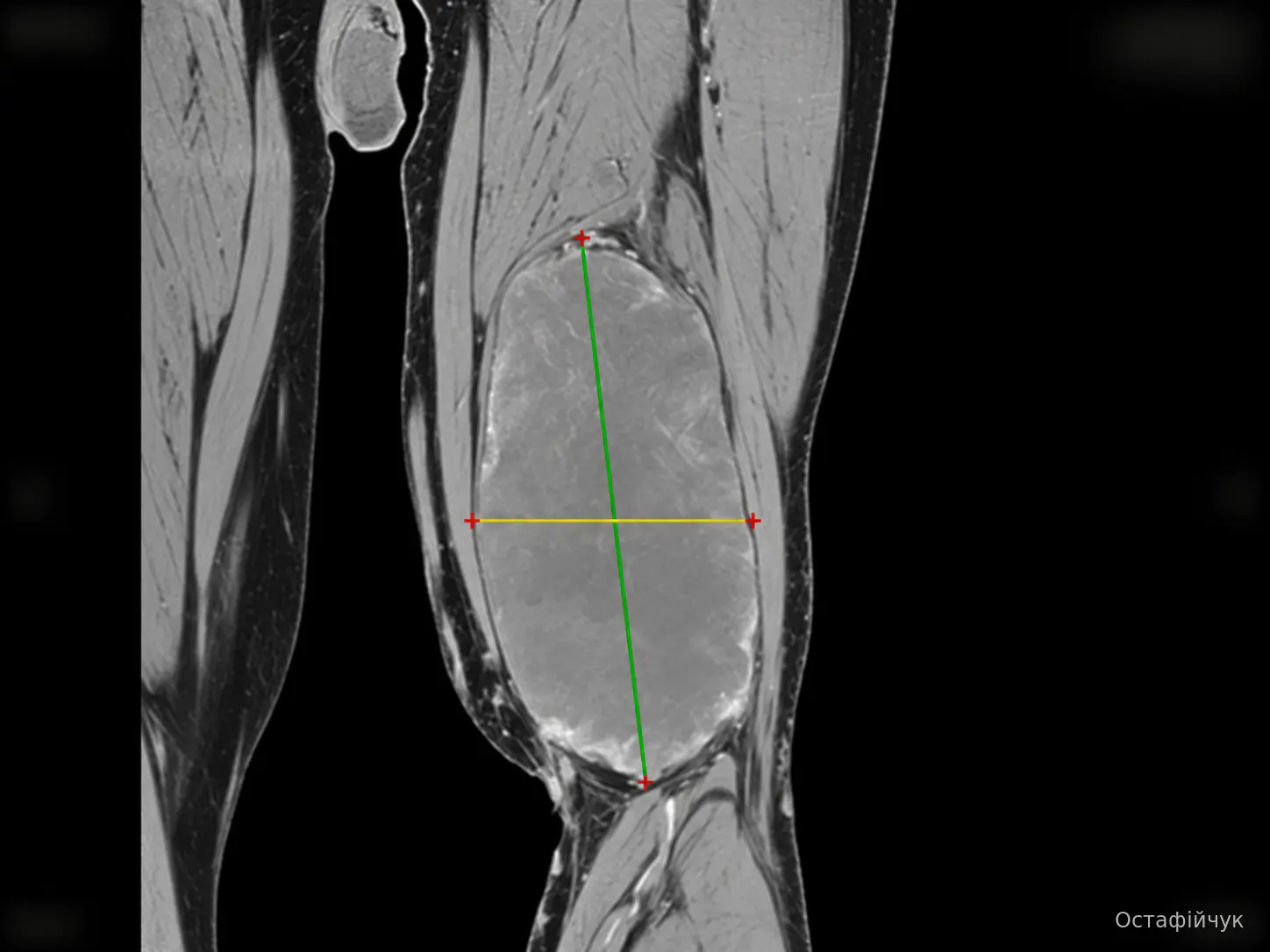
Clinical images on this page are de-identified materials from the author’s clinical archive that were already approved for educational publication. No identifying DICOM overlays or patient identifiers are displayed.
What to review at MDT before systemic treatment
Expected drug sensitivity differs substantially between sarcoma entities.
Symptom control, tumour shrinkage before local treatment, durable disease control or treatment of an oligometastatic situation.
Cumulative cardiotoxicity affects the possibility of further anthracycline treatment.
Broad NGS is not required for everyone, but selected alterations can open targeted or cellular treatment options.
The pathway matters
Systemic therapy depends on exact histology, treatment line, therapeutic goal and molecular features. A specialized sarcoma treatment unit helps avoid applying one regimen to biologically different diseases.
GEIS 2018: 3-year overall survival 82% in reference centers vs 70.4% in local hospitals. NETSARC 2019: surgery in a reference center was associated with better overall survival (HR 0.681). Observational data. GEIS · NETSARC.