Radiotherapy for sarcoma: before surgery or after?
Radiotherapy is not required for every sarcoma. Its main role is to reduce local recurrence risk when that risk is high enough, while preserving as much long-term function as possible.
Two standard approaches
Smaller treatment volume and lower total dose, but a higher risk of early wound-healing complications.
The surgical approach and reconstruction should ideally be coordinated before radiotherapy begins.
Final pathology then helps determine whether postoperative radiotherapy is needed.
Usually larger fields and a higher total dose, with more late fibrosis, oedema and stiffness.
Preoperative RT
A typical modern conventional international regimen for localized extremity/trunk STS.
- smaller treatment volume;
- lower total dose;
- less late fibrosis and oedema;
- but more early wound-healing complications.
Postoperative RT
Usually a larger volume and higher dose when RT is indicated after primary surgery.
- lower early wound-complication risk;
- final pathology can guide the indication;
- but late fibrosis, oedema and stiffness are more frequent.
These numbers explain the usual logic of modern regimens, not an individual prescription. Dose, fractionation and target volumes are determined by the radiation oncologist.
When RT is discussed particularly often
Higher local risk
G2-G3, deep location, larger size, anatomically difficult margins or a setting where local recurrence would cause major functional harm.
Critical structures nearby
Major vessels, nerves, joints or bone. In selected cases, a planned close margin plus RT can help preserve a critical structure within an oncologically sound plan.
Subtype matters
Myxoid liposarcoma is more radiosensitive than many other sarcomas and can shrink substantially after preoperative RT.
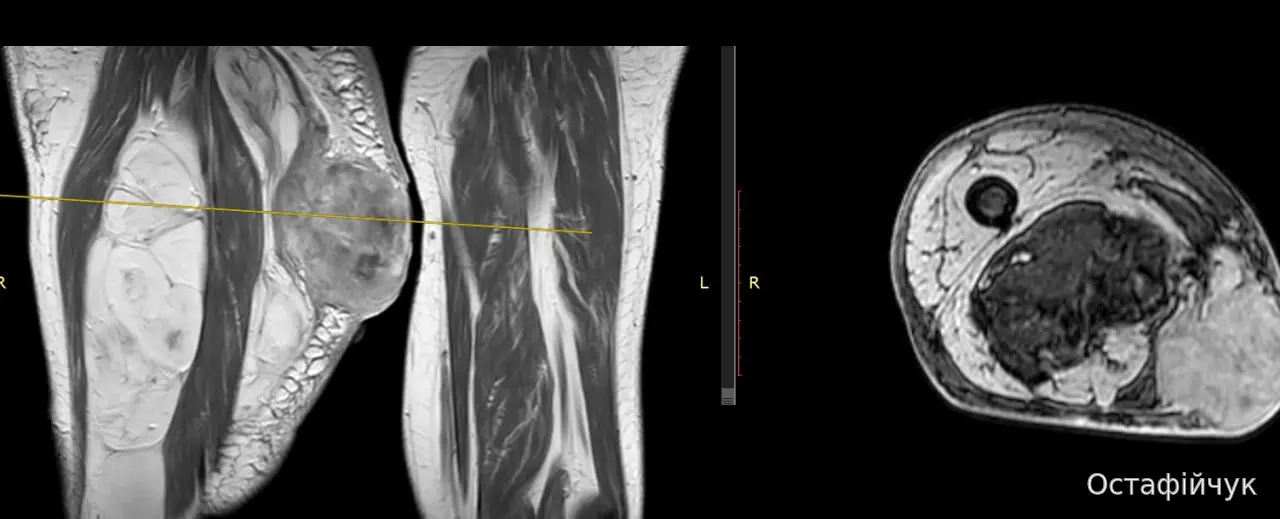
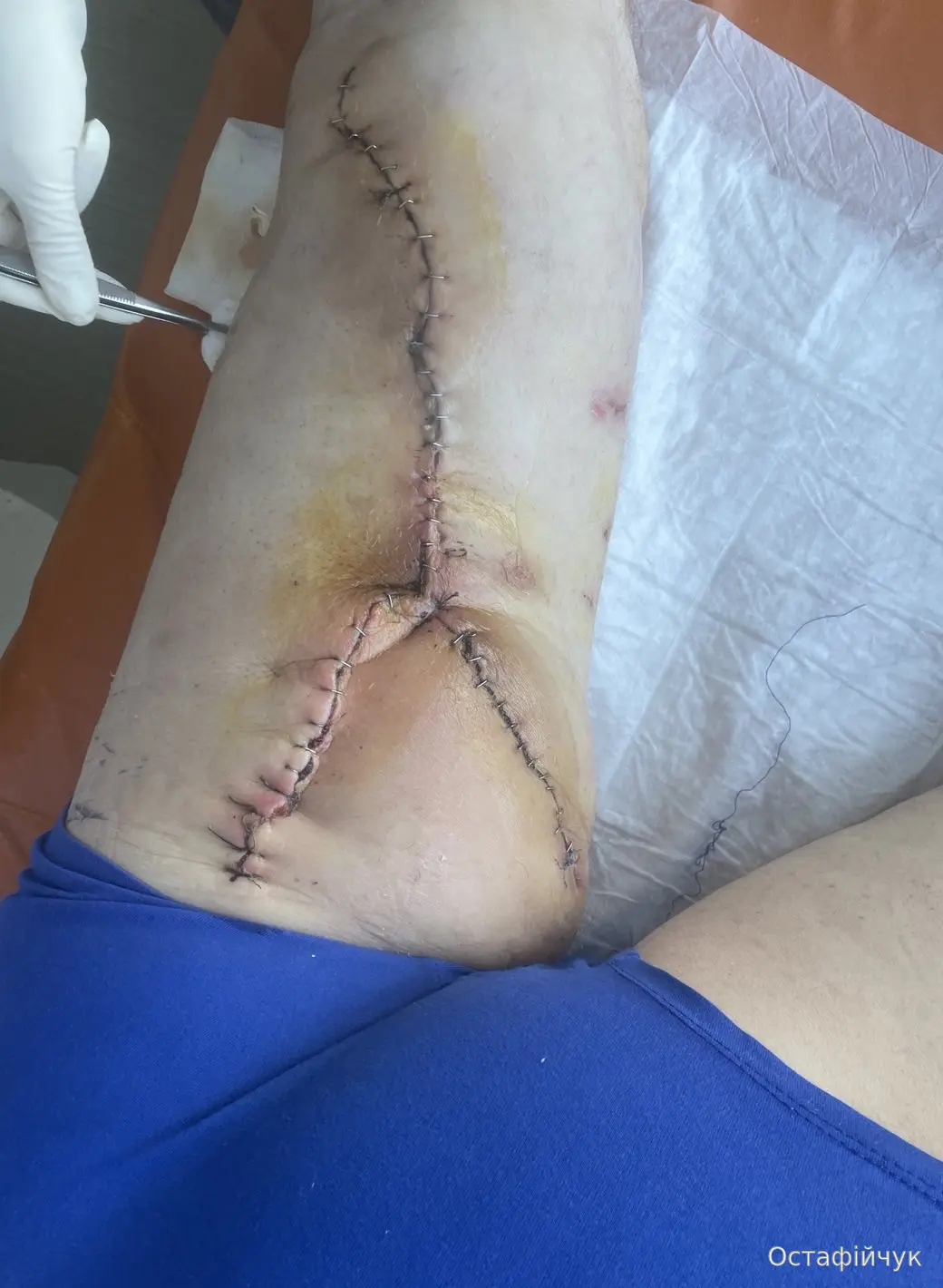
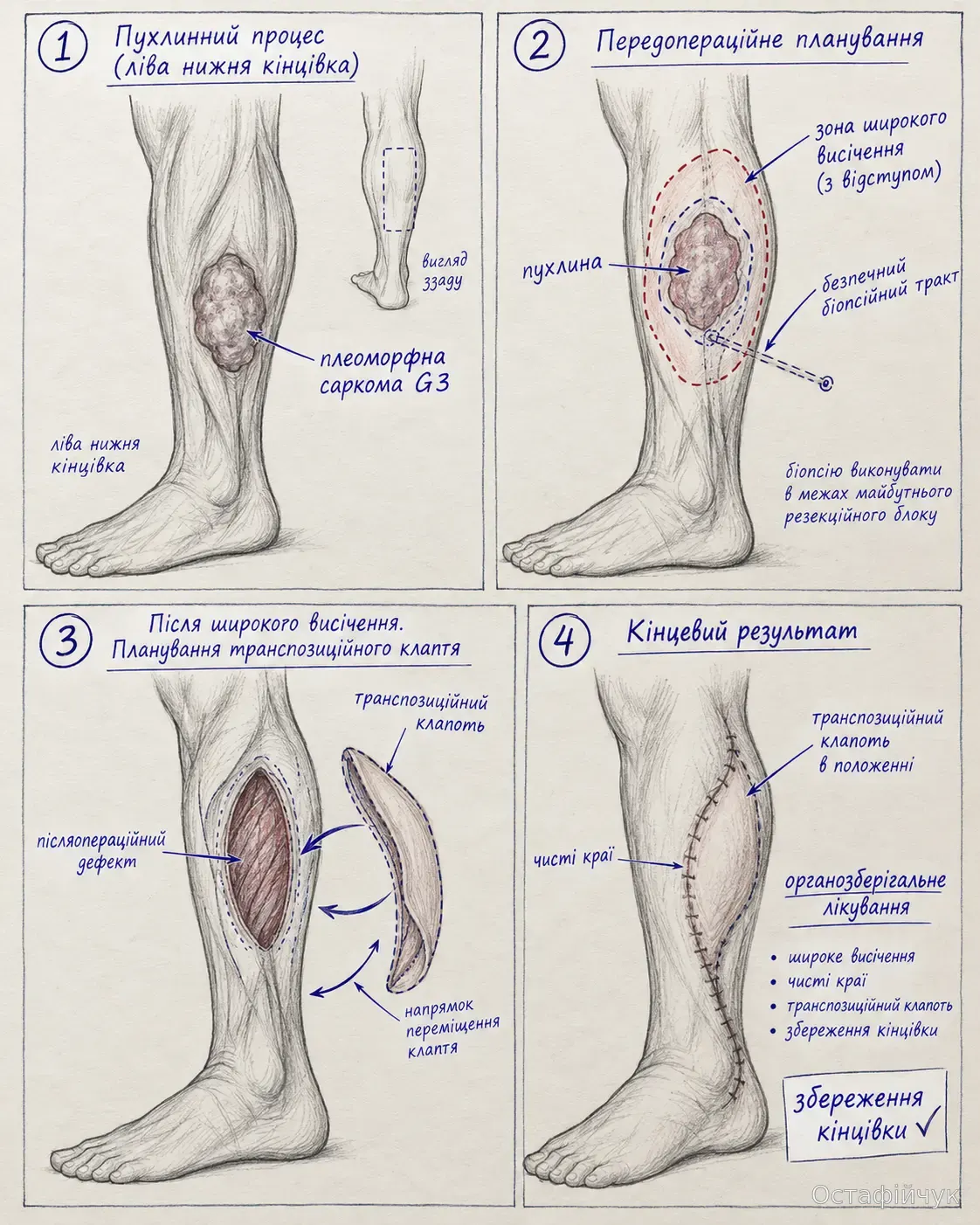
Ukraine: national standard and current international practice
Ukrainian Standard No.1434 recognises both pre- and postoperative RT, but its dose wording differs from current ESTRO/ASTRO, UK and GEIS recommendations. For patients, the practical message is simple: the regimen should be based on current specialist radiation planning, not copied from a number found online.
If preoperative RT is chosen, the surgeon, radiation oncologist and reconstructive team should agree on target volume, future incision, timing of surgery and wound risk. For postoperative RT, the operative report, tumour-bed clips and exact pathology margins are important.
Clinical images on this page are de-identified materials from the author’s clinical archive that were already approved for educational publication. No identifying DICOM overlays or patient identifiers are displayed.
The pathway matters
For sarcoma, sequence matters as much as dose. In a specialized sarcoma treatment unit, the surgeon, radiation oncologist and reconstructive team coordinate radiotherapy, surgical access, resection and closure before treatment begins.
GEIS 2018: 3-year overall survival 82% in reference centers vs 70.4% in local hospitals. NETSARC 2019: surgery in a reference center was associated with better overall survival (HR 0.681). Observational data. GEIS · NETSARC.