Resection and reconstruction after removal of a bone tumour
Reconstruction is planned together with oncological resection. Its purpose is to restore support and function without compromising the required tumour removal.
Oncological extent comes first
The team defines which bone and surrounding tissues must be removed with adequate margins. The reconstructive method is chosen only after that. Reconstruction must not reduce the oncologically necessary resection.
What may be used
Fixation
Plates, screws, nails or other constructs provide stability, with selection depending on site and bone quality.
Graft or cement
Autograft, allograft and bone cement serve different purposes and are not universally interchangeable.
Endoprosthetic reconstruction
A modular or custom prosthesis may replace a large joint-bearing defect in selected cases.
Arthrodesis
Fusion may provide a stable weight-bearing limb when a mobile joint cannot be reconstructed safely.
Osteosarcoma of the tibia: resection and reconstruction
After removal of the tibial segment involved by osteosarcoma, a substantial bone and soft-tissue defect remained. Reconstruction using the fibula was then performed, followed by stabilisation of the reconstructed segment.
Resection → reconstruction → stabilisation
Show operative images - sensitive clinical material
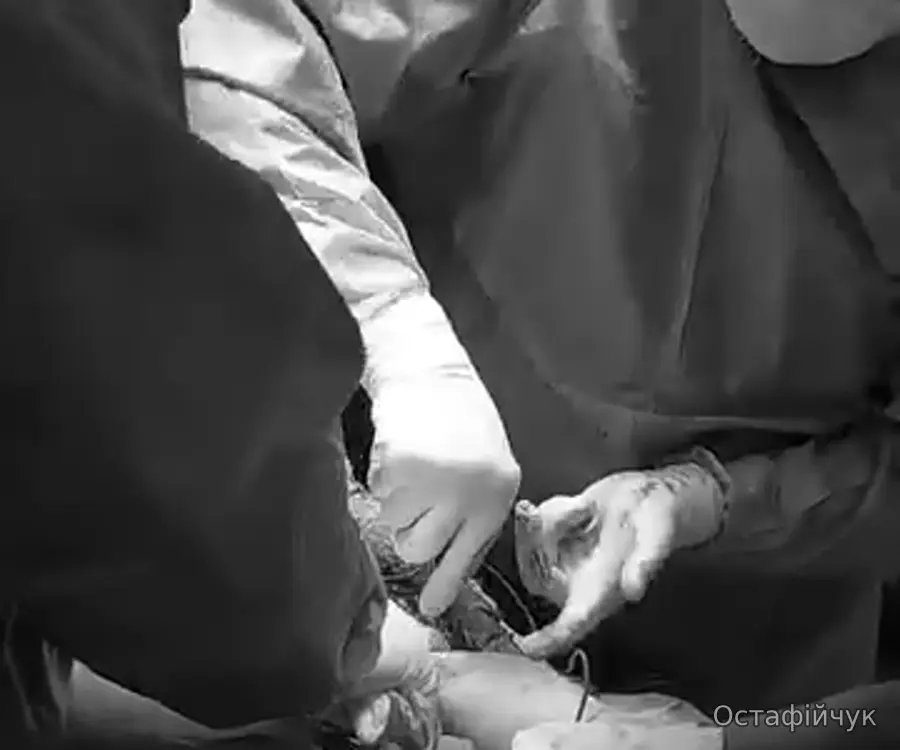
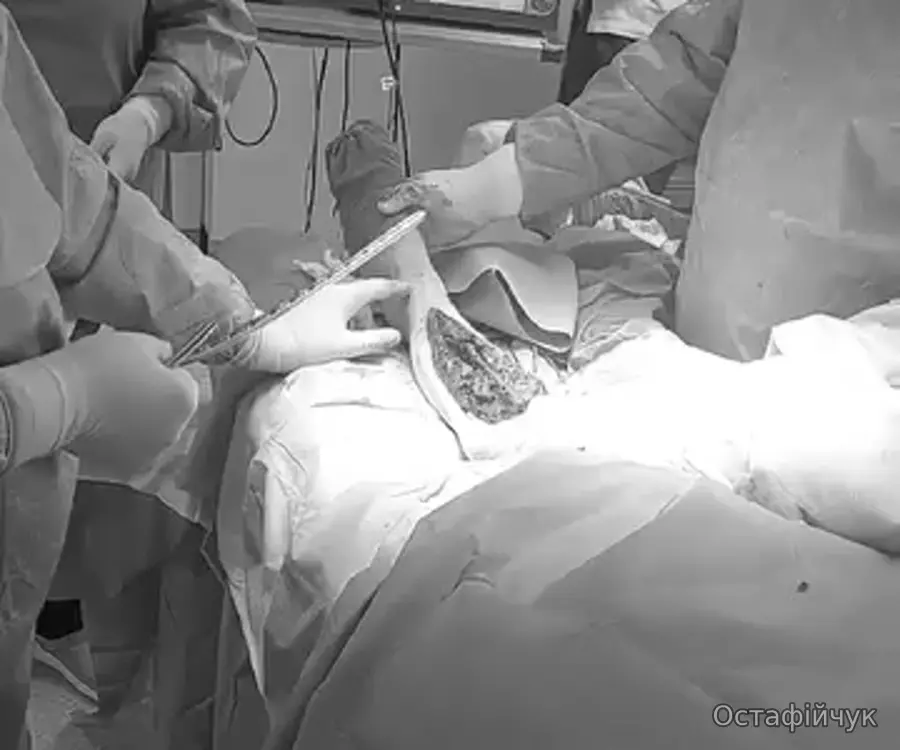

Clinical material from the author's archive is published with confirmed consent. Images are de-identified and illustrate principles; they do not replace assessment of an individual case.
Rehabilitation
Weight-bearing, range of motion and rehabilitation timing depend on the resection, fixation strength, soft-tissue condition and additional treatment. Early priorities are healing and construct safety; functional goals are reviewed over time.