Clinical case: osteosarcoma of the tibia
Limb-sparing treatment with resection of the involved tibial segment, reconstruction and fixation.
Case summary
The patient was diagnosed with osteosarcoma of the tibia. After completion of the diagnostic work-up, limb-sparing surgery was planned - resection of the involved bone segment followed by reconstruction and stabilisation.
Clinical problem and imaging
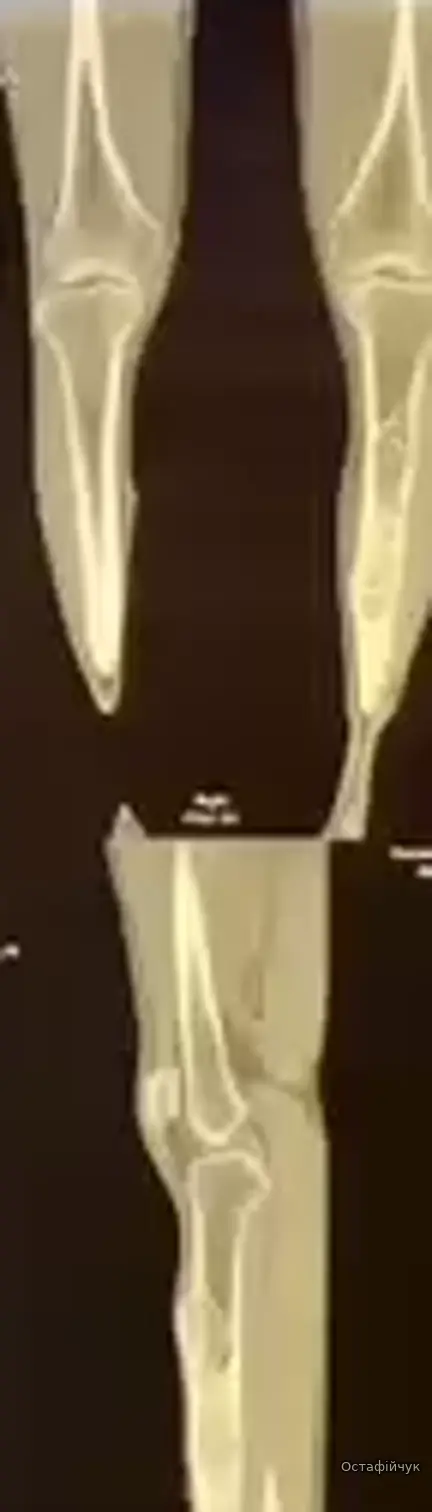
Preoperative imaging was used to assess the location and extent of tibial involvement and to plan the surgical procedure.
Biopsy and histological verification
Biopsy and histological verification confirmed osteosarcoma. Imaging and pathological findings were then integrated into planning of subsequent treatment.
Planning
The operation was planned in two parallel directions: the tibial segment involved by the tumour had to be removed to the required oncological extent, while the method of restoring the limb’s weight-bearing function after resection was defined in advance.
Resection
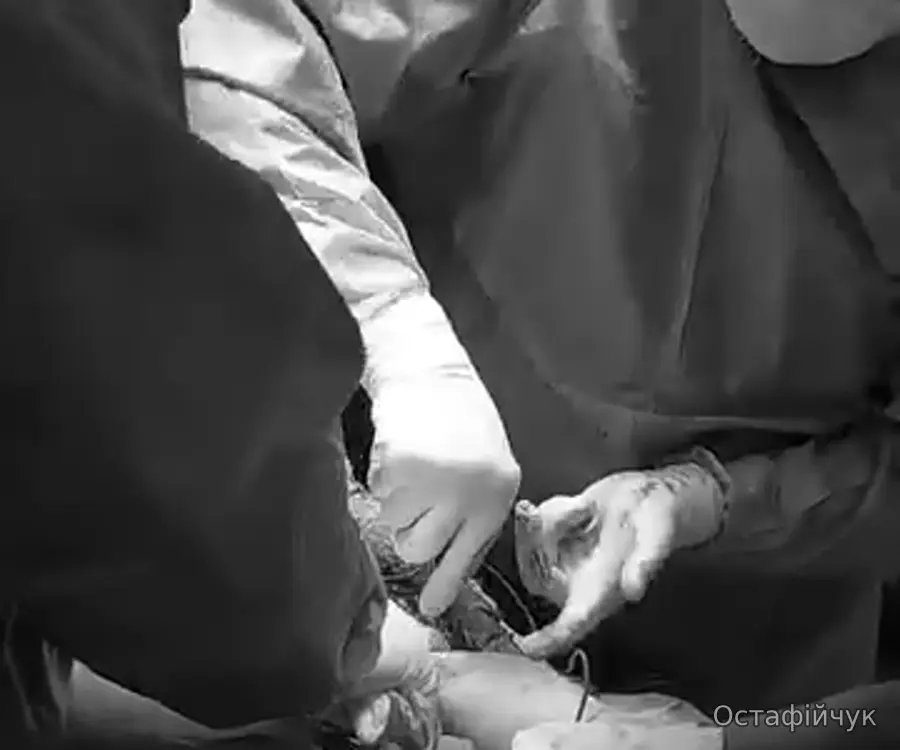
The involved segment of the tibia was resected. Removal of the tumour created a bone and soft-tissue defect that required reconstruction.
Show operative image - sensitive clinical material
Reconstruction
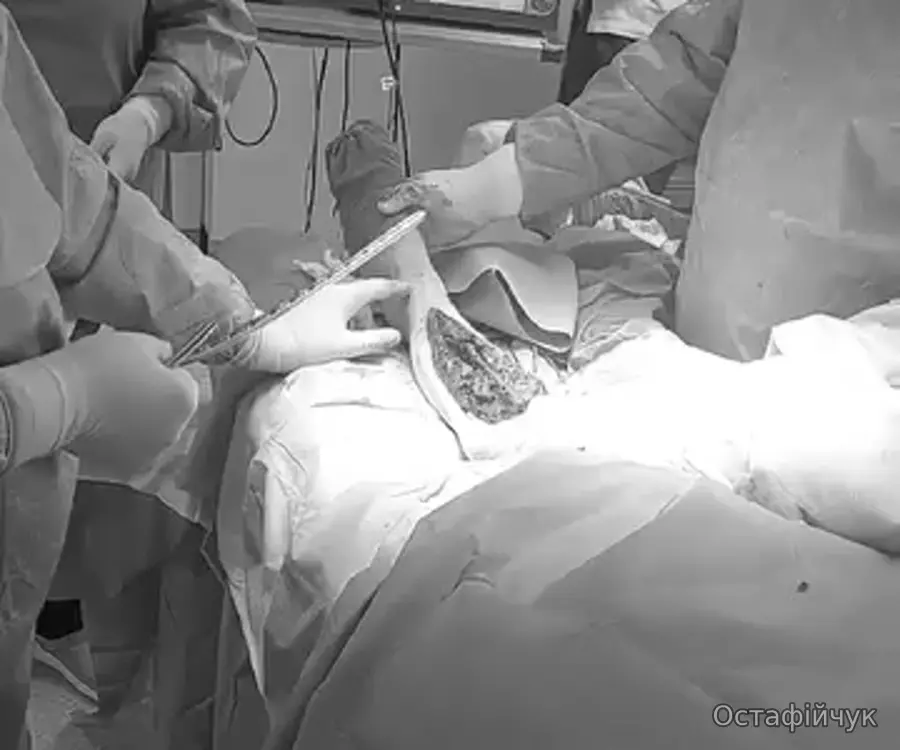
The fibula was used to reconstruct the bone defect. Reconstruction was performed as the next stage of the limb-sparing operation after tumour resection. The reconstructive method depends on the site, size of the defect, condition of the soft tissues and the overall treatment plan.
Show operative image - sensitive clinical material
Fixation
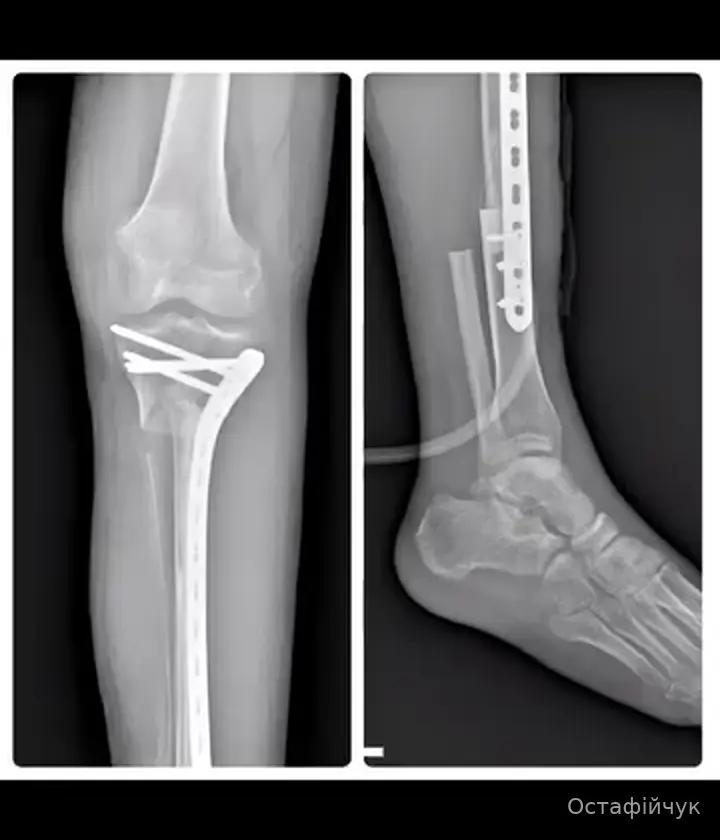
After reconstruction, the segment was stabilised with metal fixation to provide mechanical stability and conditions for subsequent recovery of the limb.
Show operative image - sensitive clinical material

Early postoperative assessment
The early postoperative radiograph is used to assess the position of the reconstructed segment and metal fixation. Functional and oncological outcomes are subsequently assessed over time during follow-up.
What this case demonstrates
In osteosarcoma, oncological resection and the subsequent reconstruction should be planned as a single strategy. The aim of surgery is to achieve the required oncological extent of tumour removal and, when possible, preserve a weight-bearing and functional limb.
Clinical material is published with confirmed consent. Images are de-identified and explain the treatment sequence; they do not replace assessment of an individual case.