Understanding a skin cancer pathology report
The tumour name is only the first line. Management also depends on subtype, invasion, margins, risk features and whether pathology fits the clinical picture.
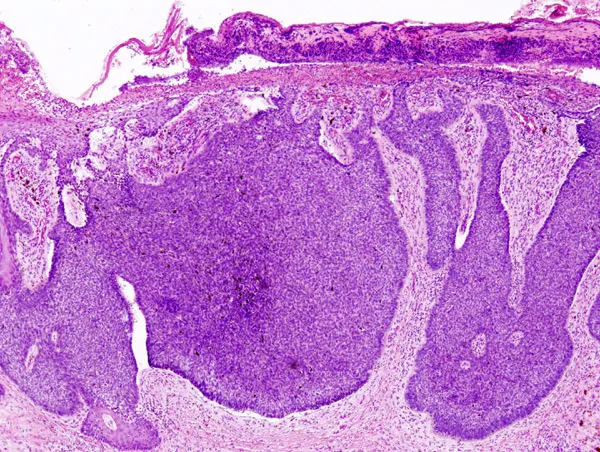
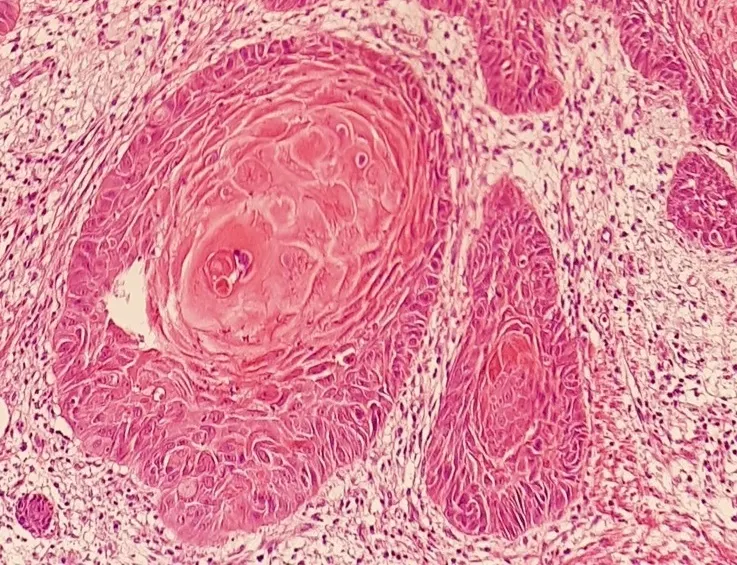
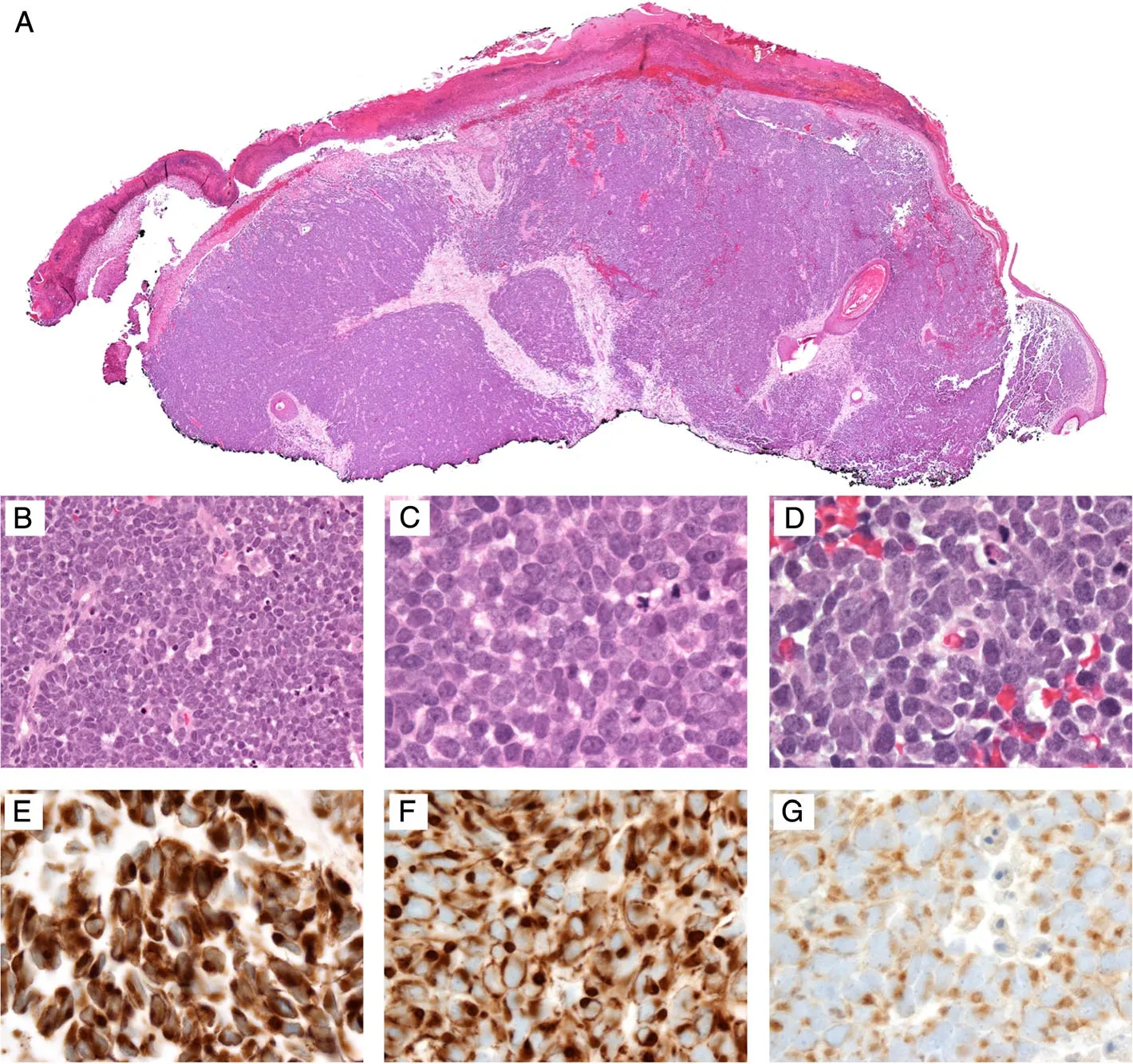
Key lines that change management
BCC, cSCC, in situ, Merkel, sebaceous or another rare skin tumour.
Whether disease is intraepidermal or invasive, and how deeply it extends.
Whether tumour reaches a peripheral or deep specimen margin.
PNI, LVI, differentiation, bone/nerve invasion and entity-specific features.
What “clear margins” mean
Negative margins mean tumour does not reach the inked edge of the excised specimen. This is important for local control but does not mean zero recurrence risk. Subtype, site, method of margin assessment and tumour biology still matter.
What PNI and LVI mean
PNI means perineural invasion - tumour cells growing along or around a nerve. LVI means lymphovascular invasion. In cSCC and some rare skin cancers these features can increase risk and alter the need for imaging, radiotherapy or closer follow-up.
What to look for by tumour type
Aggressive histologic pattern, peripheral/deep margin status and, in complex disease, evidence of perineural spread can change local treatment planning.
BCC pathway →These features, interpreted with tumour size and site, shape recurrence and nodal risk and may change imaging, radiotherapy or MDT planning.
cSCC pathway →Diagnosis requires an appropriate neuroendocrine IHC panel and exclusion of mimics; pathology of the primary lesion does not replace separate nodal staging.
Merkel pathway →For periocular disease, surface spread and margins matter; when clinically appropriate, MMR IHC is a screening tool rather than a stand-alone germline diagnosis.
Sebaceous carcinoma →For EMPD, primary cutaneous disease must be distinguished from secondary epidermal spread; rare adnexal carcinomas may require additional IHC, molecular confirmation or expert review.
Rare skin tumours →When expert pathology review is useful
Questions to ask after the report
- What is the exact type and subtype?
- Are there invasive or high-risk features?
- Are peripheral and deep margins clear?
- Is pathology review or additional IHC needed?
- Is further staging, radiotherapy or re-excision needed?
- What is the follow-up plan?
European BCC guideline 2023 · EADO cSCC diagnostics 2026 · ESMO-EURACAN Merkel 2024 · Sebaceous guideline 2024.