Sebaceous carcinoma
A rare malignant sebaceous tumour, particularly important around the eyelid. It can mimic benign inflammatory disease and requires precise pathology and margin control.
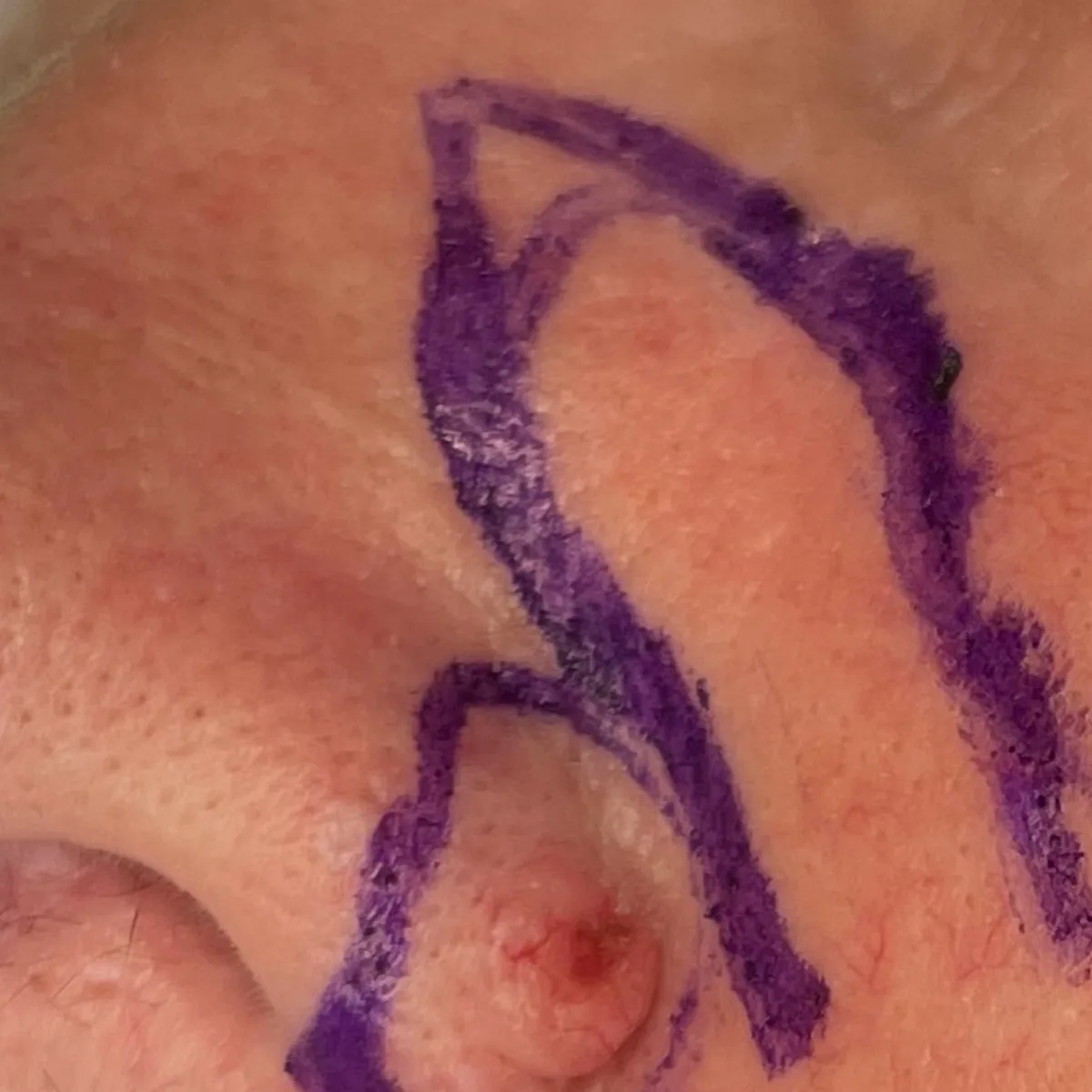
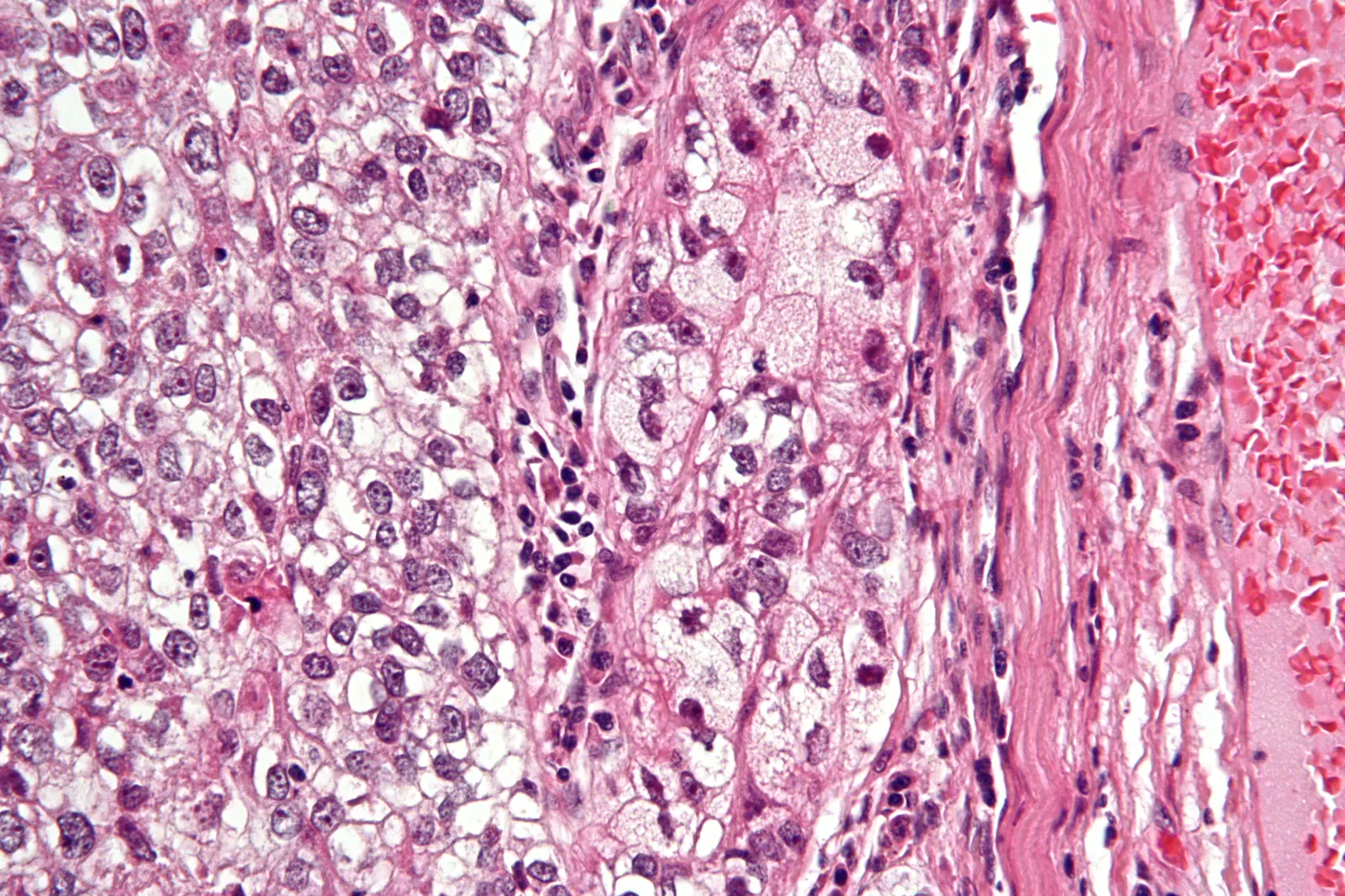
How it can be missed
Eyelid sebaceous carcinoma may mimic chalazion, chronic blepharitis or other inflammatory disease. Recurrent or atypical inflammation, lash loss, eyelid-margin thickening or a yellowish nodule deserves biopsy.
Pathology
Confirmation of sebaceous differentiation and assessment for pagetoid spread can be important. Additional immunohistochemistry and mismatch-repair assessment are selected according to morphology and clinical context.
Pagetoid spread and the “invisible” component
Particularly in periocular disease, tumour cells can spread superficially within conjunctival or eyelid-margin epithelium beyond the visible nodule. When pagetoid spread is suspected, planning should not rely only on the visible tumour border; additional map biopsies may be needed in selected cases.
Staging and regional nodes
Staging intensity depends on site, size, depth, differentiation and overall clinical risk. For eyelid tumours, regional nodal basins deserve specific assessment; suspicious nodes should be sampled. The role of SLNB is not uniformly established across all scenarios and should be individualized.
Surgery and margin control
Current guidance favours complete margin control, including micrographically controlled surgery where appropriate. Eyelid reconstruction must preserve function after oncological clearance.
Muir-Torre / Lynch
Follow-up
Surveillance includes the local scar/eyelid, regional nodal basins and symptoms of recurrence. Intensity depends on site, stage, margin status and individual risk factors.