The ABCDE Rule: How to Notice a Suspicious Mole
Five features that can help you notice a changing mole and seek medical assessment promptly.
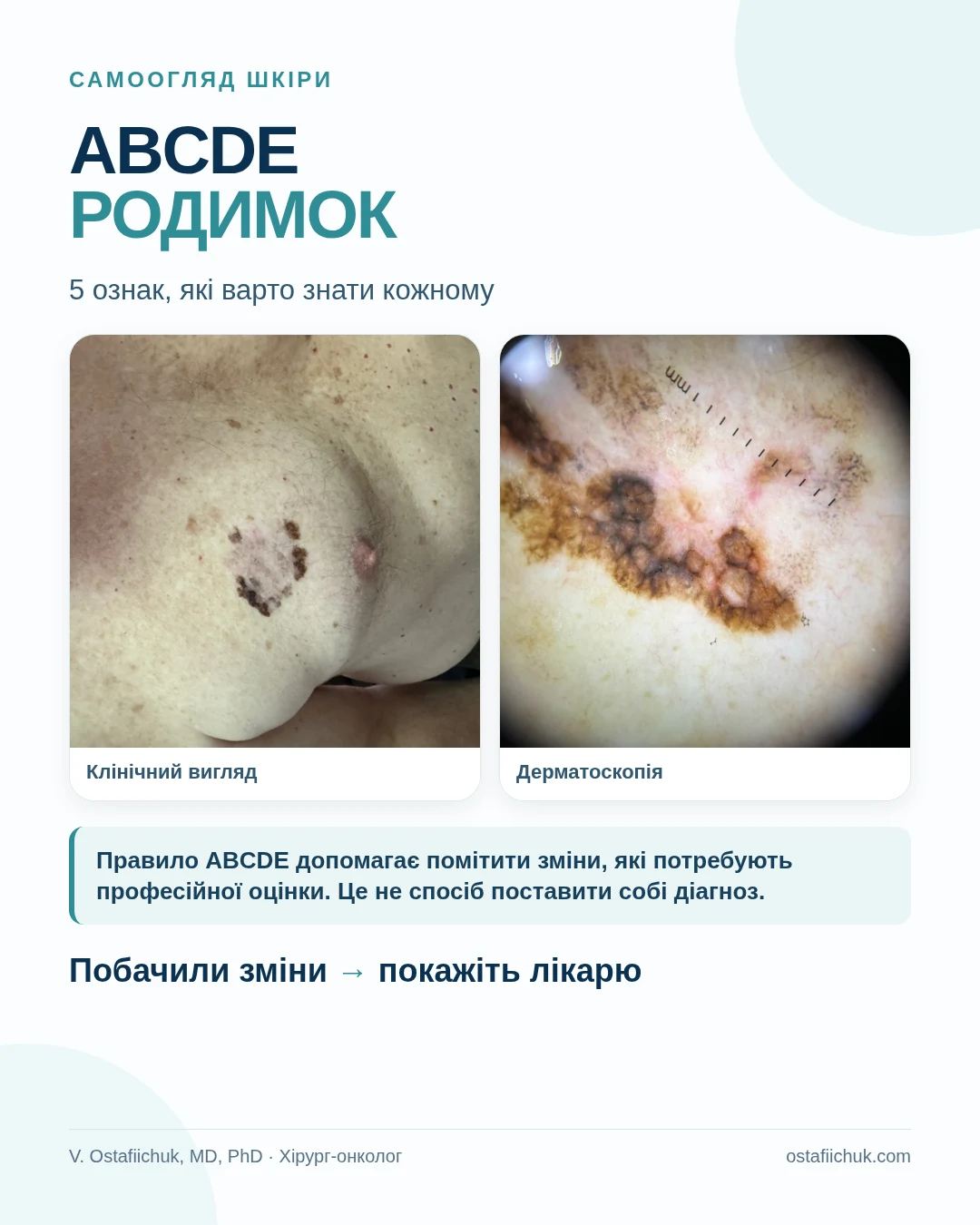
The ABCDE rule can help you notice skin changes that deserve professional assessment. It cannot diagnose melanoma, but it is a useful guide during self-examination. A lesion that is changing, looks different from your other moles or causes concern should be assessed by a clinician.
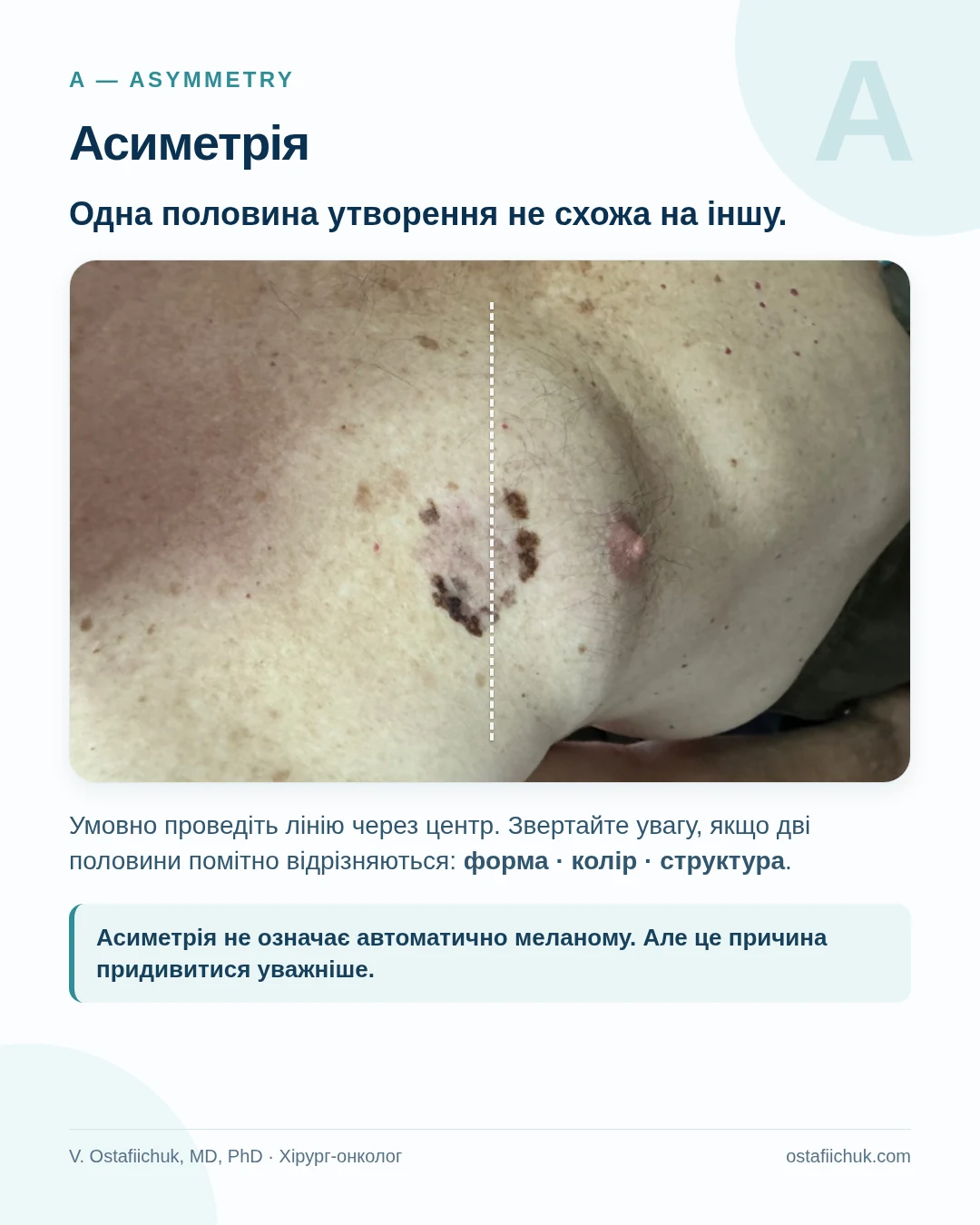
A — Asymmetry
One half of the lesion does not match the other. This is one feature worth noticing during a skin self-check.
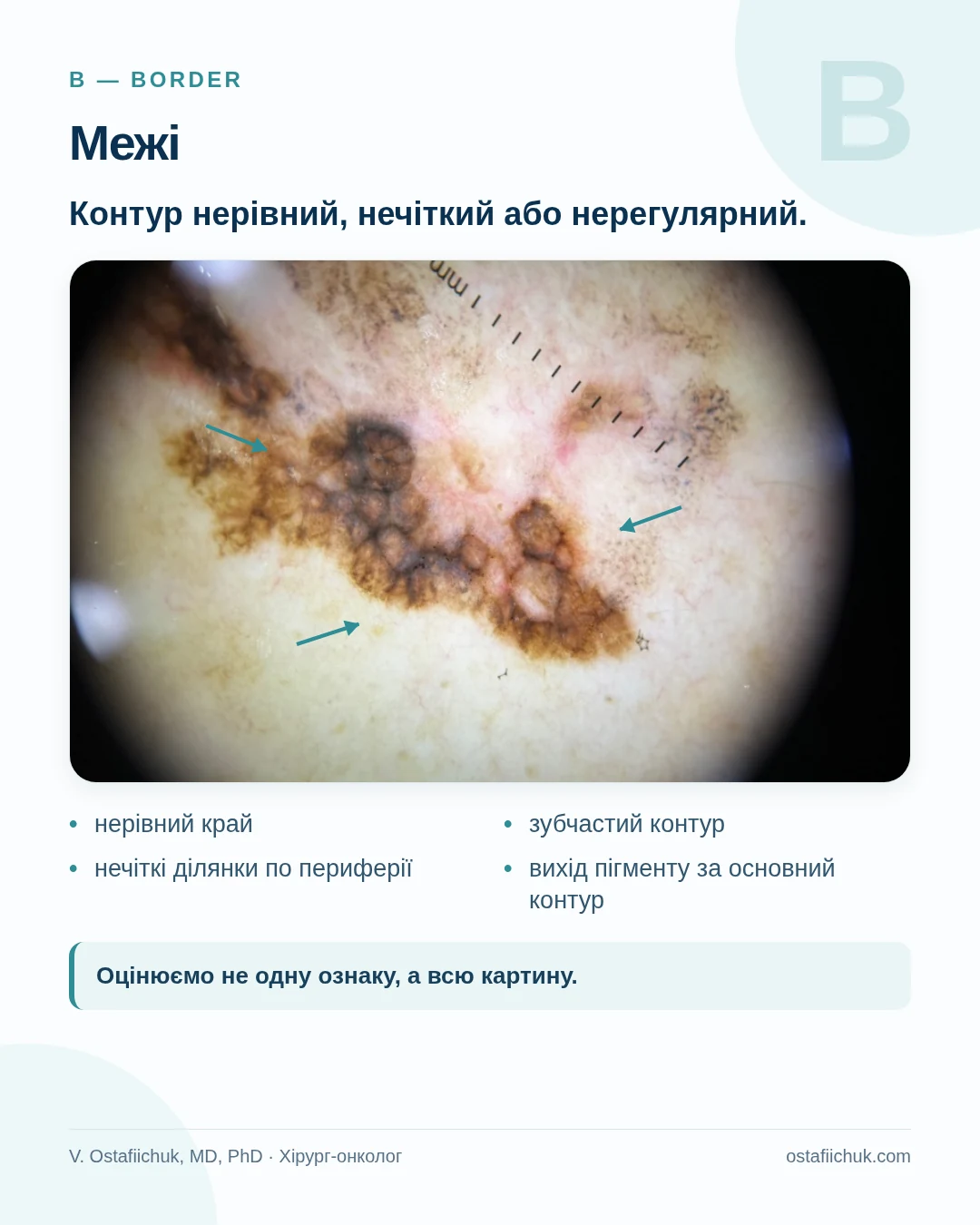
B — Border
The edge may be irregular, scalloped, blurred or poorly defined.
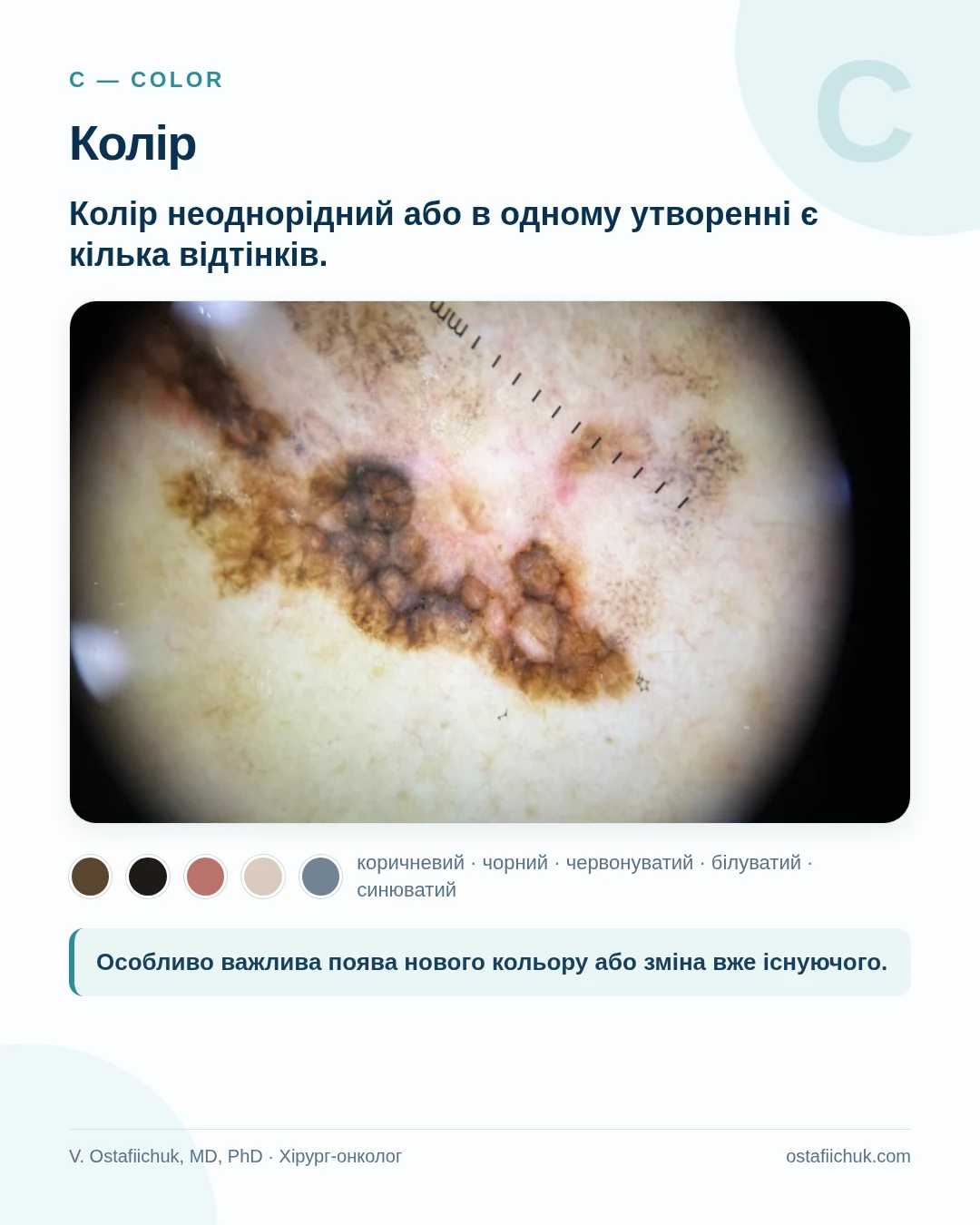
C — Colour
Colour may be uneven, or several shades may be present within the same lesion.
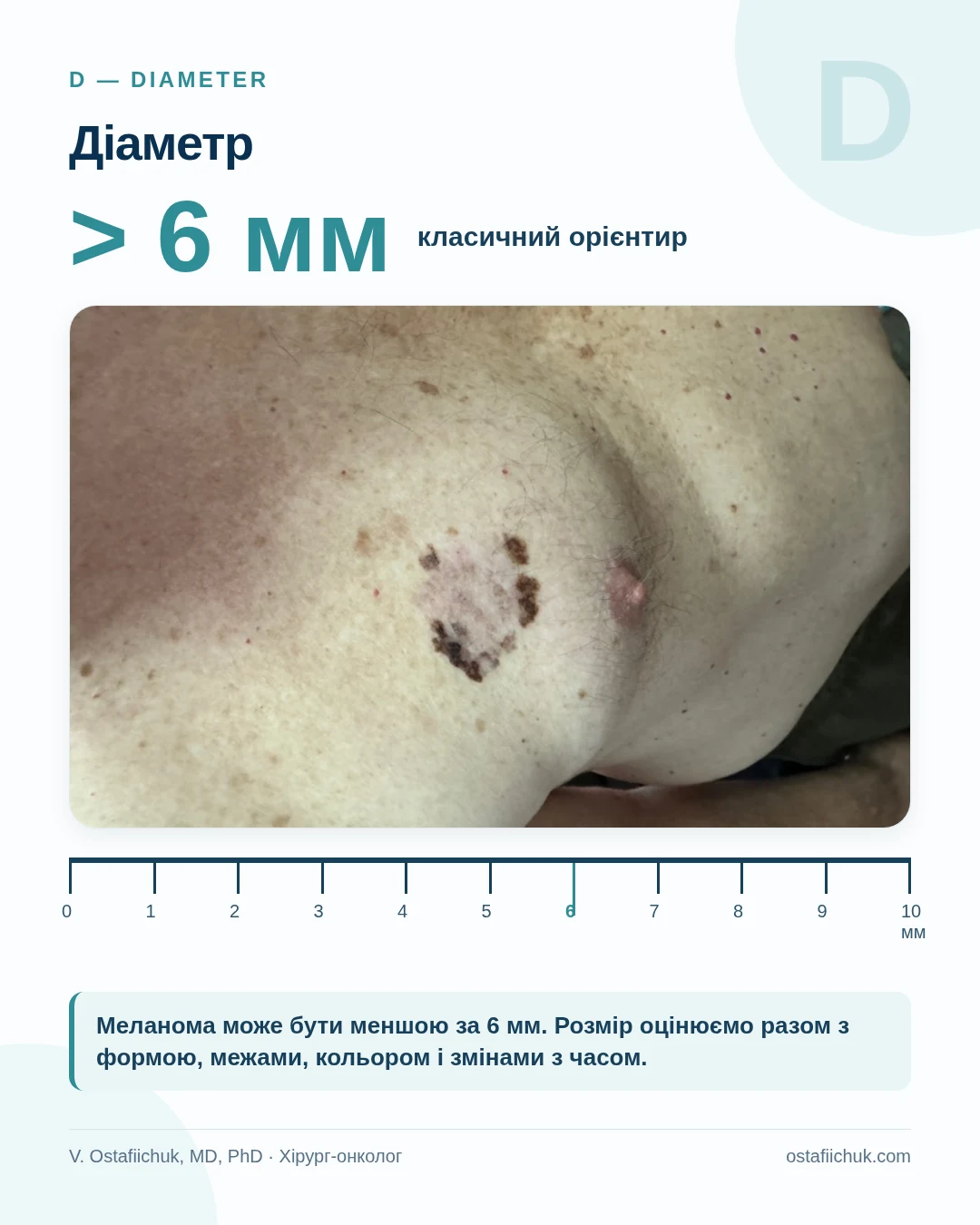
D — Diameter
Six millimetres is a classic reference point, not a diagnostic threshold. Melanoma can be smaller than 6 mm, so a small diameter does not by itself make a lesion safe.
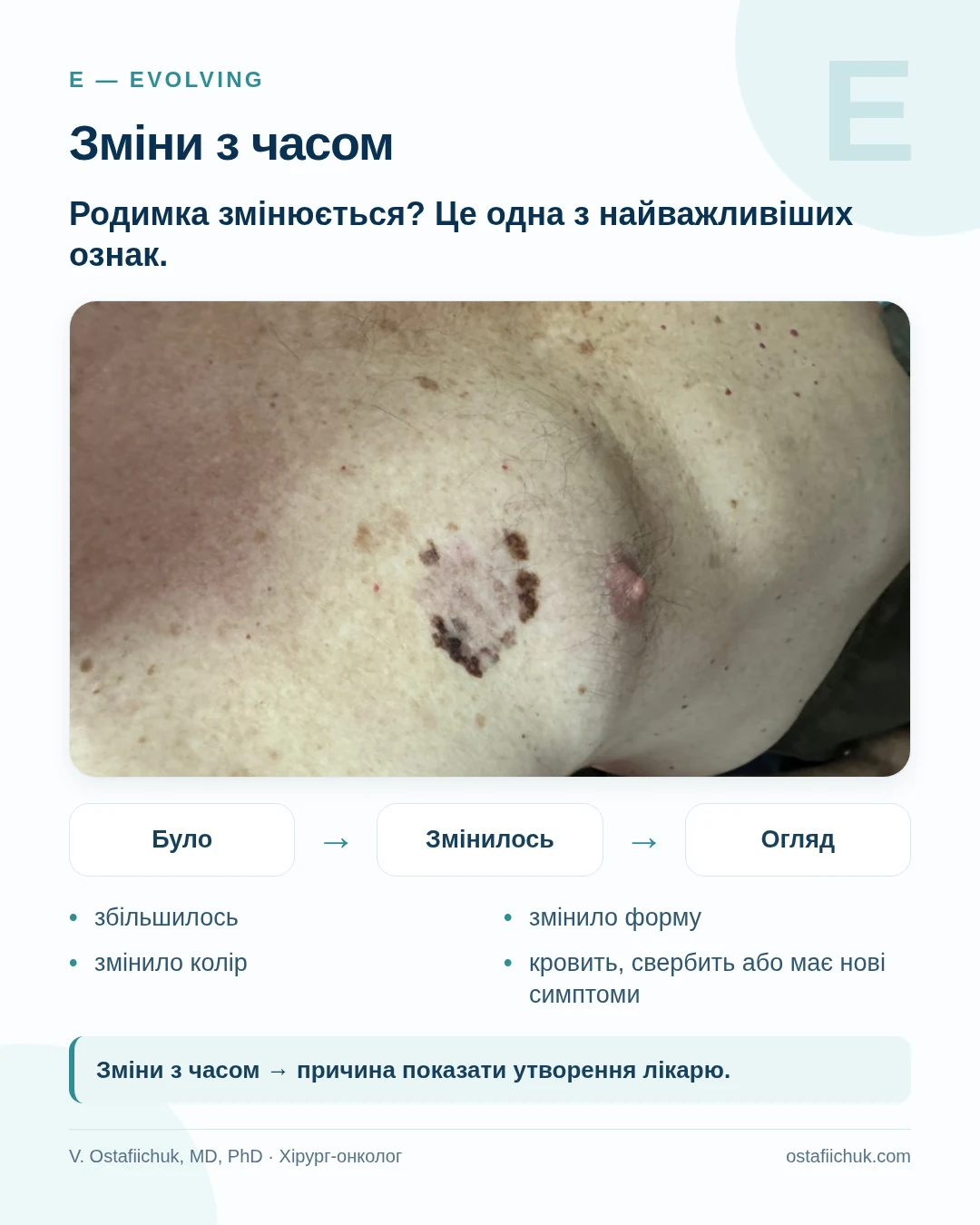
E — Evolving
Changes in size, shape or colour matter. New symptoms such as bleeding or itching also deserve assessment.
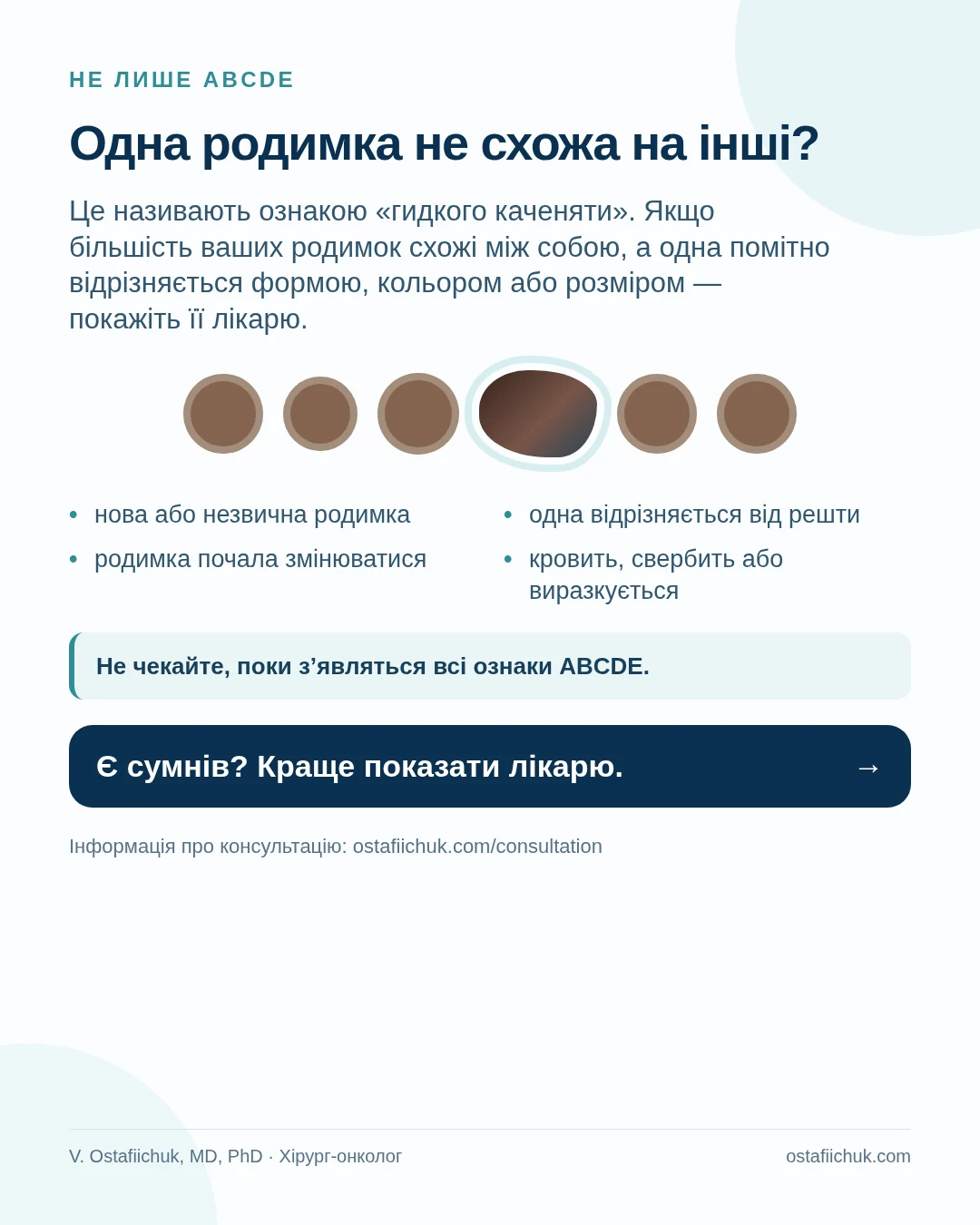
The “ugly duckling” sign
A lesion that clearly looks different from a person’s other moles deserves attention even when it does not show every ABCDE feature.
Clinical images from the author's archive, published with patient consent.
When to seek assessment
Self-examination does not replace a specialist consultation. A clinician makes the final assessment; when indicated, the diagnosis is clarified with a biopsy and histological examination.