Extramammary Paget disease
A rare intraepidermal adenocarcinoma of apocrine-bearing sites. A central question is whether disease is primary cutaneous EMPD or secondary spread from an internal carcinoma.
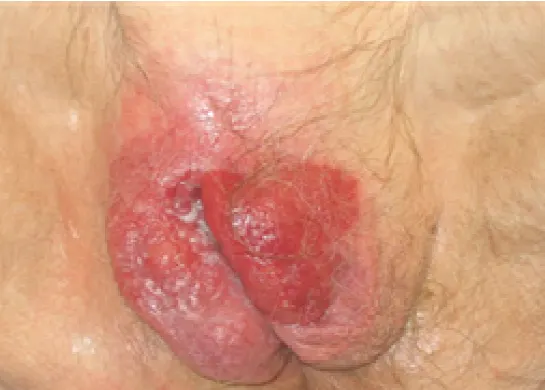
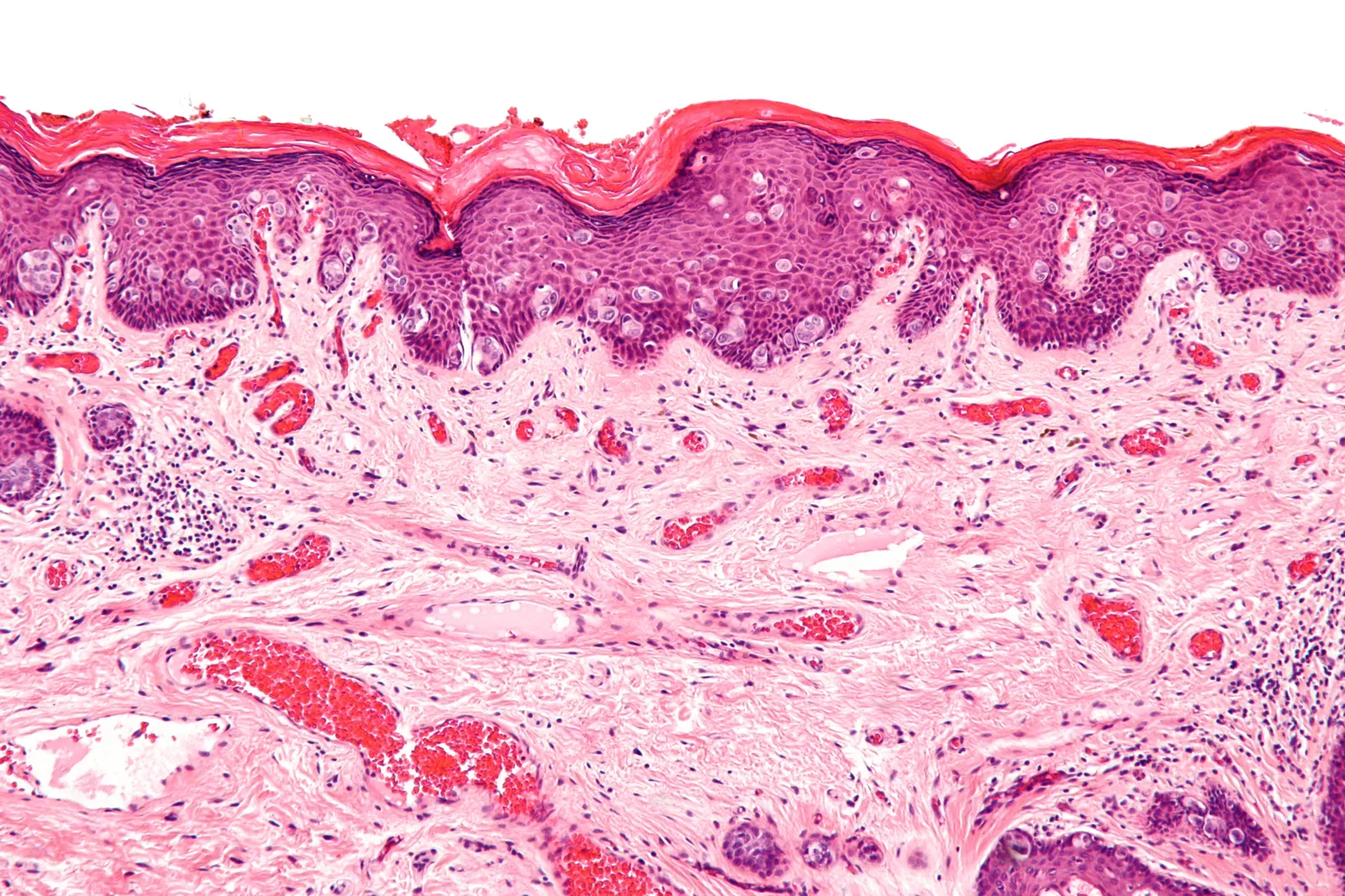
Presentation
Persistent erythematous, pruritic or eczema-like lesions in vulvar, perianal, groin or other apocrine-bearing sites may be treated as dermatitis for months. Persistent unilateral disease or failure to respond deserves biopsy.
Primary versus secondary EMPD
Immunohistochemistry and anatomic site help determine whether disease is primary cutaneous EMPD or epidermal spread from colorectal, urothelial or another internal carcinoma.
Internal-malignancy screening
Screening should be anatomically directed rather than identical for every patient.
Depth of invasion and nodes change the pathway
Intraepidermal EMPD and invasive adenocarcinoma carry different risks. Pathology should clarify dermal invasion, lymphovascular invasion and other features that increase regional or systemic risk. Suspicious nodes require confirmation; SLNB may be considered selectively in invasive/high-risk scenarios rather than applied routinely to every patient.
In situ / intraepidermal
The priority is local control and excluding secondary EMPD.
Invasive
Depth, nodal risk and more complete staging become increasingly important.
Nodal/metastatic
Systemic planning may incorporate HER2 and other potentially actionable features.
Local treatment
Surgery with reliable margin control remains important in localized disease. Subclinical extension can exceed visible borders.
HER2 and systemic therapy
A subset of advanced EMPD is HER2-positive. Prospective HER2-targeted data are emerging, but this applies to biomarker-selected advanced disease rather than routine localized EMPD.
HER2 landscape 2026
A 2026 review summarizes emerging experience with antibodies, tyrosine-kinase inhibitors and antibody-drug conjugates in HER2-positive EMPD. Because the disease is rare, the evidence base still relies on small series, case reports and early prospective data, so molecular selection and MDT review remain essential.
Current evidence
Guideline 2025 · Anatomic screening guidance · HER2DOC phase II.