Cutaneous angiosarcoma
An aggressive malignant vascular tumour, often involving scalp or head-and-neck skin in older adults, but also occurring after radiotherapy or with chronic lymphoedema.
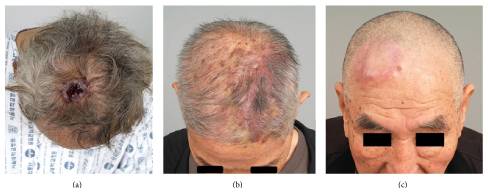
When to suspect it
An enlarging bruise-like, violaceous-red patch or infiltrated area that bleeds easily, particularly on scalp or face, deserves early biopsy.
Pathology
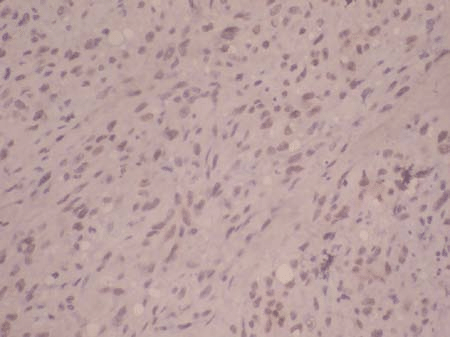
Morphology is supported by endothelial markers. High-grade disease may lose obvious vascular architecture, making expert pathology important.
Why the visible skin border can be misleading
Cutaneous angiosarcoma often extends beyond the obvious violaceous or erythematous area. Multifocal and subclinical spread is particularly important on the scalp and face. Planning therefore needs to integrate clinical examination, biopsy information, imaging and the intended local-treatment field.
Staging
Because systemic spread is a major concern, staging should assess regional nodes and distant organs according to clinical risk. In secondary angiosarcoma, prior radiotherapy, chronic lymphoedema or another predisposing context should also be documented explicitly.
Local treatment
Because disease is often infiltrative and multifocal, reliable margins can be difficult. Surgery and radiotherapy are frequently integrated in an MDT plan.
Systemic treatment
Systemic treatment is used for unresectable, recurrent or metastatic disease, individualized according to prior treatment, patient fitness and disease pattern.