Adnexal skin carcinomas
A heterogeneous group of very rare malignant tumours of sweat-gland and other skin appendage differentiation. A major pitfall is misclassifying them as conventional cSCC or benign adnexal lesions.
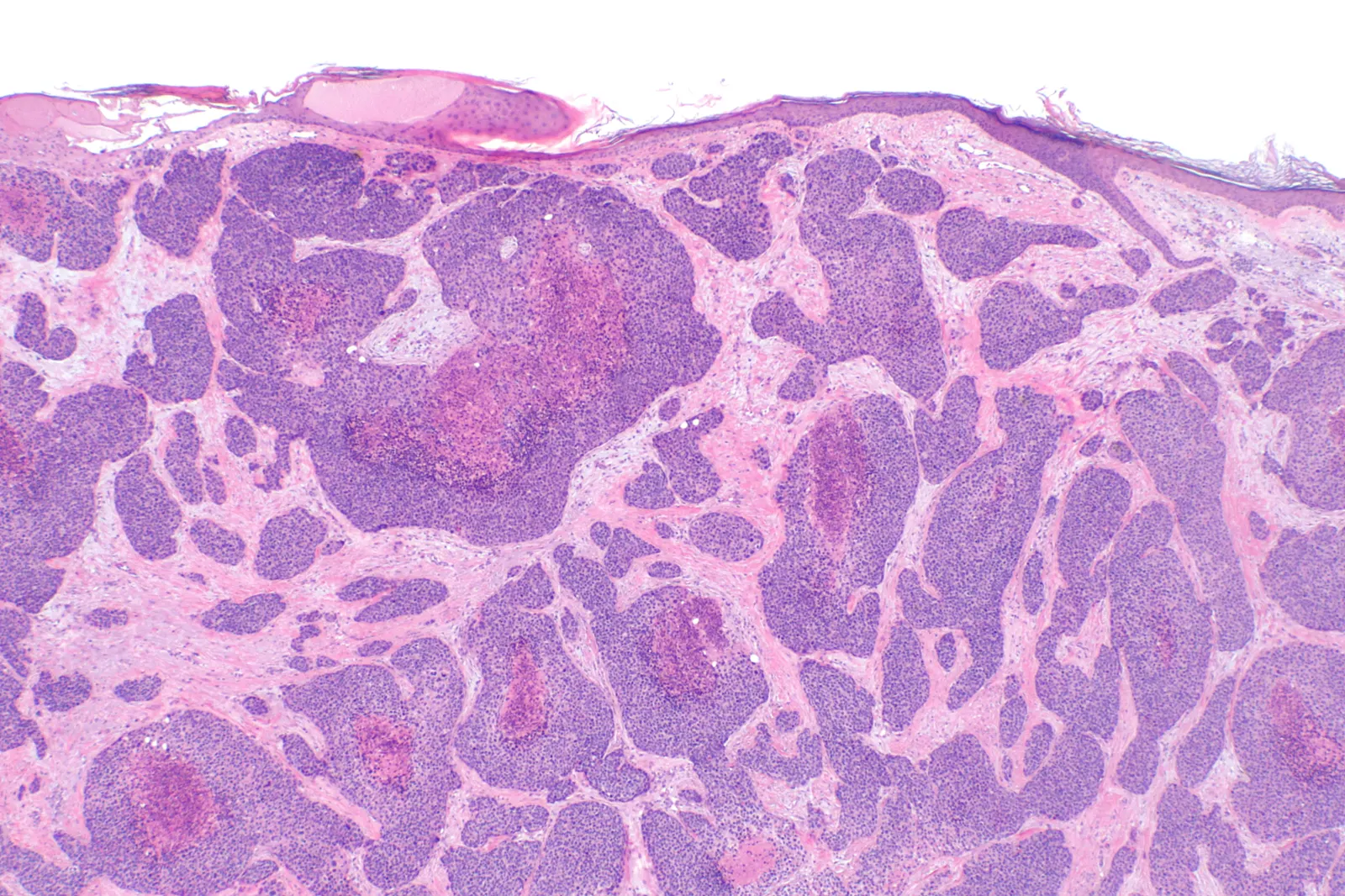
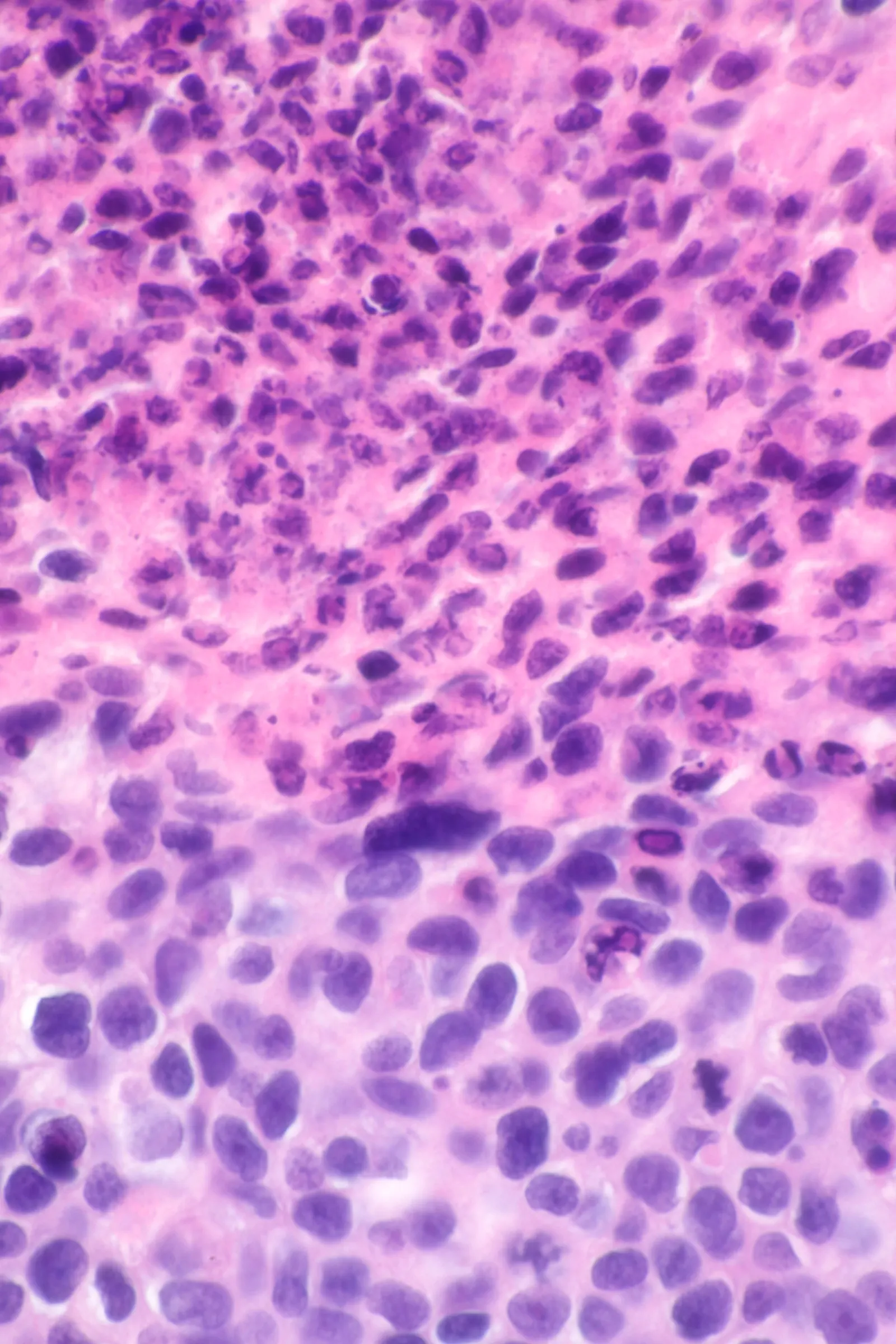
Porocarcinoma
A malignant tumour with eccrine differentiation. Depth, lymphovascular invasion, mitotic activity and margin status are important pathological features.
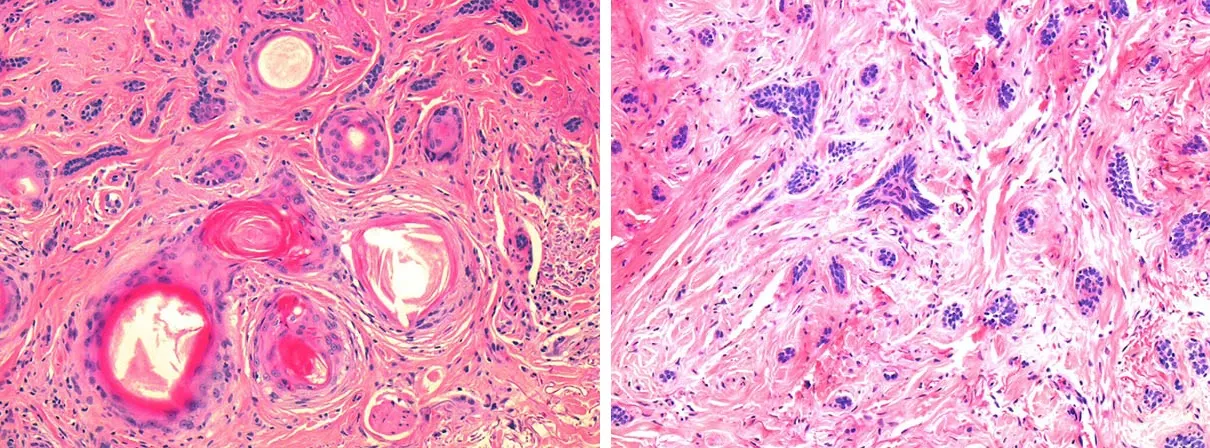
Microcystic adnexal carcinoma
A usually locally aggressive facial tumour with deep subcutaneous extension and a tendency toward perineural invasion. Superficial biopsy can underestimate true depth.
When regional nodes become relevant
Nodal risk differs between entities. In porocarcinoma, depth, lymphovascular invasion, a high mitotic rate and other high-risk features increase concern; clinically suspicious nodes should be sampled. In microcystic adnexal carcinoma, the dominant problem is more often deep local infiltration and perineural spread than early routine nodal dissemination.
Why a superficial shave can be insufficient
Deeply infiltrative adnexal tumours may show only superficial keratin cysts or a deceptively bland superficial component. If the clinical induration is larger, firmer or more fixed than expected from the biopsy, deeper sampling or pathology review is appropriate before definitive treatment.
Margin control
Complete peripheral and deep margin control can be particularly useful for infiltrative adnexal carcinomas. The role of SLNB is not equally established across subtypes.
Molecular layer
Immunohistochemical and molecular features are increasingly useful for classification and, in selected advanced cases, target discovery.