Soft-tissue sarcoma biopsy: how it is planned and why the tract matters
A biopsy is part of the treatment pathway. It is planned after imaging so tissue can be obtained without compromising definitive surgery.
Why imaging usually comes first
MRI commonly defines the true extent and depth of a mass and its relationship to muscle, fascia, vessels, nerves and bone. An incision or unplanned removal before this assessment can alter the anatomy and make later surgery more complex.
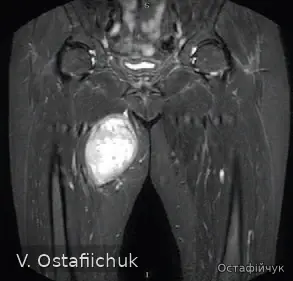
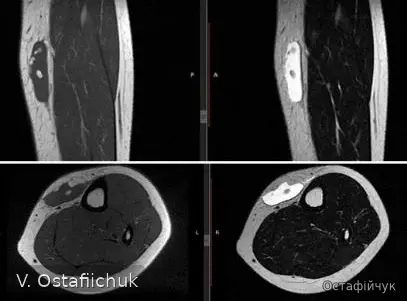
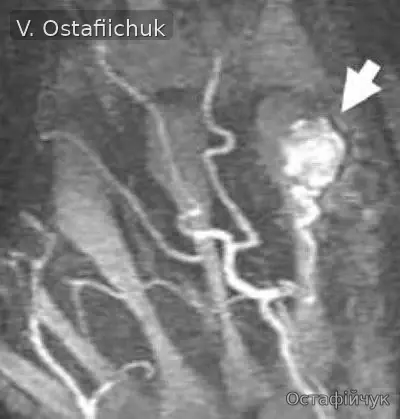
Clinical material from the author's archive is published with confirmed consent. Images are de-identified and illustrate principles; they do not replace assessment of an individual case.
The tract is part of the operative plan
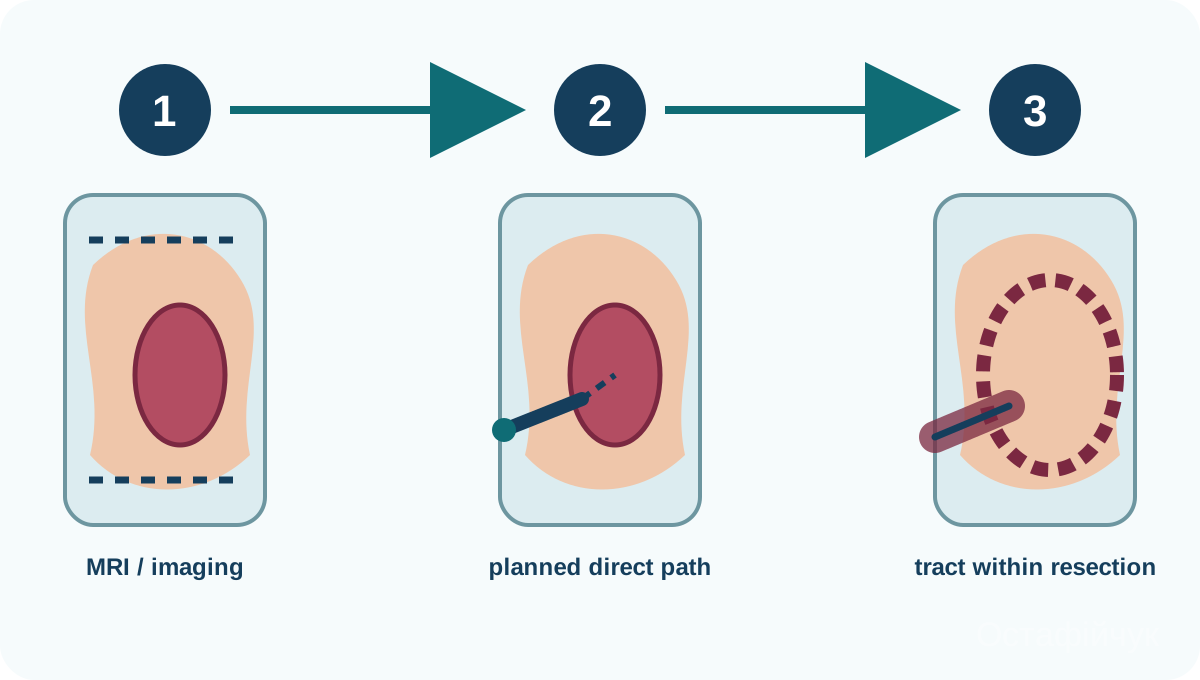
The entry point and needle direction should align with the likely surgical approach. Whenever possible, the route avoids uninvolved compartments and major neurovascular structures. The biopsy tract is commonly incorporated into definitive resection.
Which biopsy is used
Core needle biopsy
This common approach obtains several tissue cores for histology, immunohistochemistry and, when relevant, molecular testing. It may be image-guided or performed using a clearly defined anatomical plan.
Incisional biopsy
This may be considered when a percutaneous biopsy is non-diagnostic or cannot safely provide adequate tissue. The incision must still be placed within the future operative approach.
Why an unplanned excision can cause problems
Removing a mass as if it were a routine lipoma can leave involved margins, contaminate a wider field and require a larger re-excision. Principles used for a small superficial skin lesion do not automatically apply to a deep or suspicious soft-tissue mass.
After the biopsy
The pathologist correlates morphology with imaging and clinical information. The MDT decides whether more tests are needed and how surgery, radiotherapy or systemic therapy should be sequenced. This is not a universal prescription; decisions depend on subtype, site and extent.