When skin cancer needs lymph-node assessment
Not every skin cancer needs CT, ultrasound or nodal biopsy. The need depends on tumour type and metastatic risk.
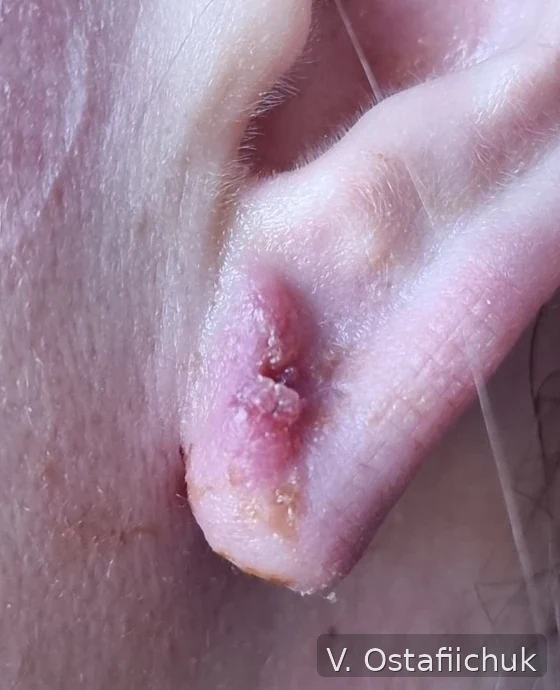
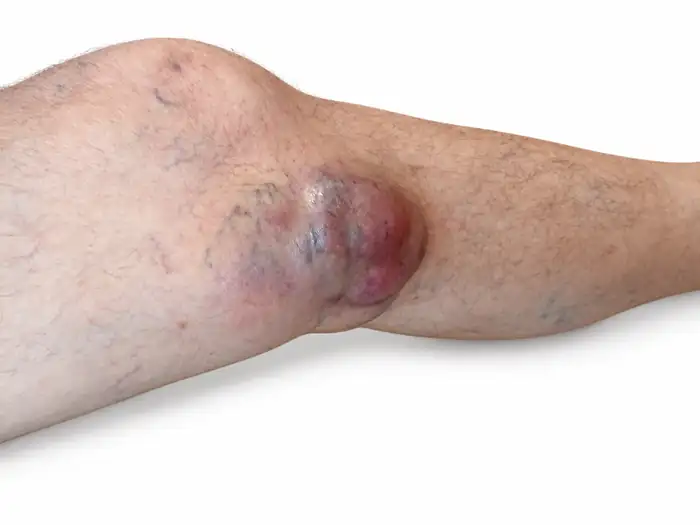
Different tumours require different nodal logic
BCC
Typical localized BCC very rarely metastasizes, so routine nodal staging is generally unnecessary.
cSCC
Higher-risk cSCC warrants more active nodal assessment; imaging depends on overall risk and anatomy.
Merkel
In clinically N0 patients, SLNB is often an important staging component when appropriate to the individual case.
What makes a node suspicious
Concern rises with a new firm node, asymmetric enlargement, progressive growth or a node in the relevant drainage basin. Enlargement alone does not prove metastasis, so targeted evaluation is required.
Ultrasound, CT or needle biopsy?
- Ultrasound is useful for superficial nodal basins and can guide immediate needle sampling;
- CT helps evaluate nodes and other anatomic regions in higher-risk settings;
- FNA or core biopsy confirms whether a suspicious node contains tumour;
- SLNB is not a biopsy of an already enlarged node; it detects microscopic disease in a clinically negative basin for selected tumour types.
cSCC 2026: risk-adapted imaging
New international consensus supports risk-adapted imaging in localized cSCC with substantial metastatic risk rather than routine CT for every patient. Decisions should incorporate pathology, site, immune status and the clinical picture.
When to seek assessment before the scheduled visit
cSCC imaging consensus 2026 · ESMO-EURACAN Merkel guideline.